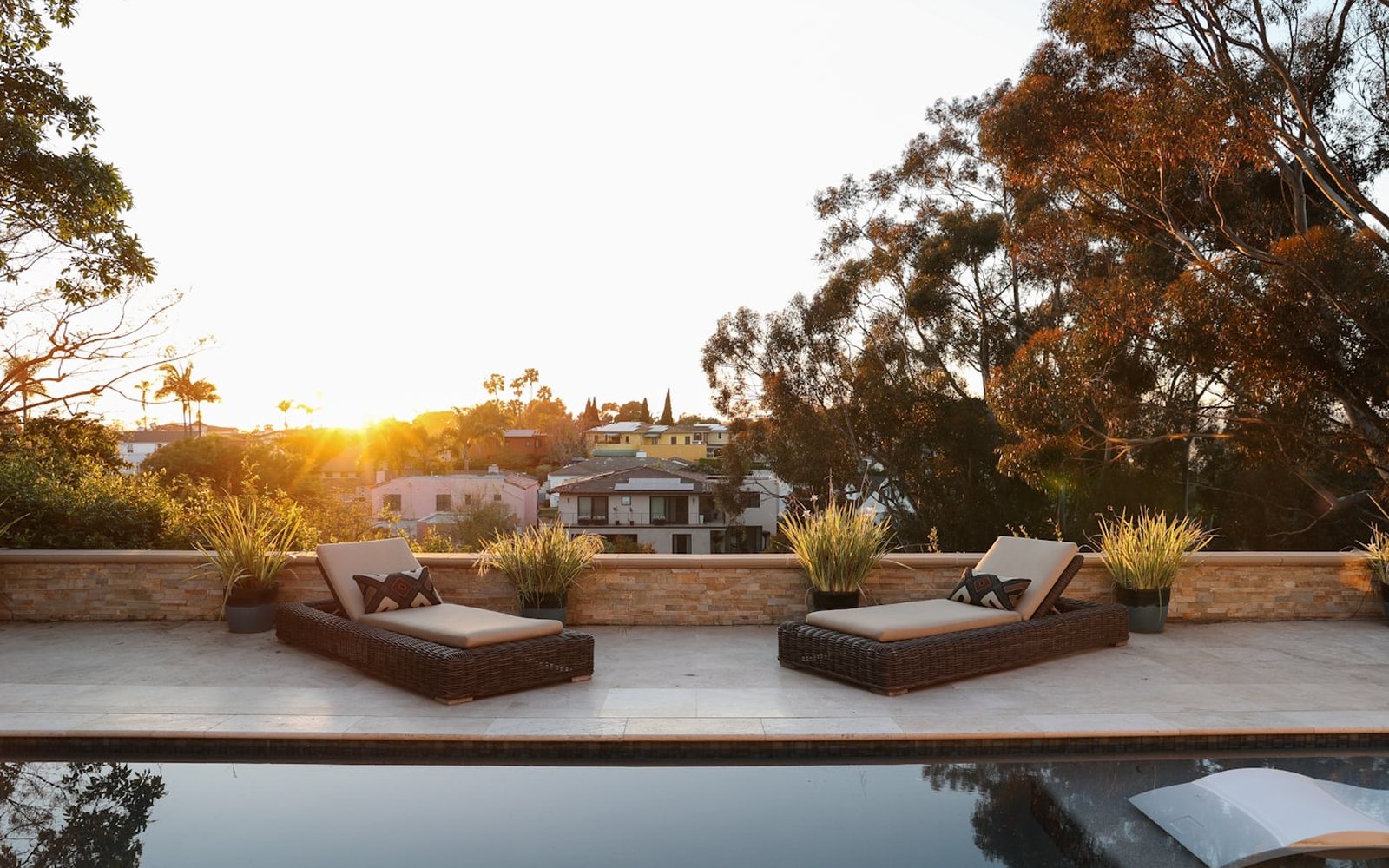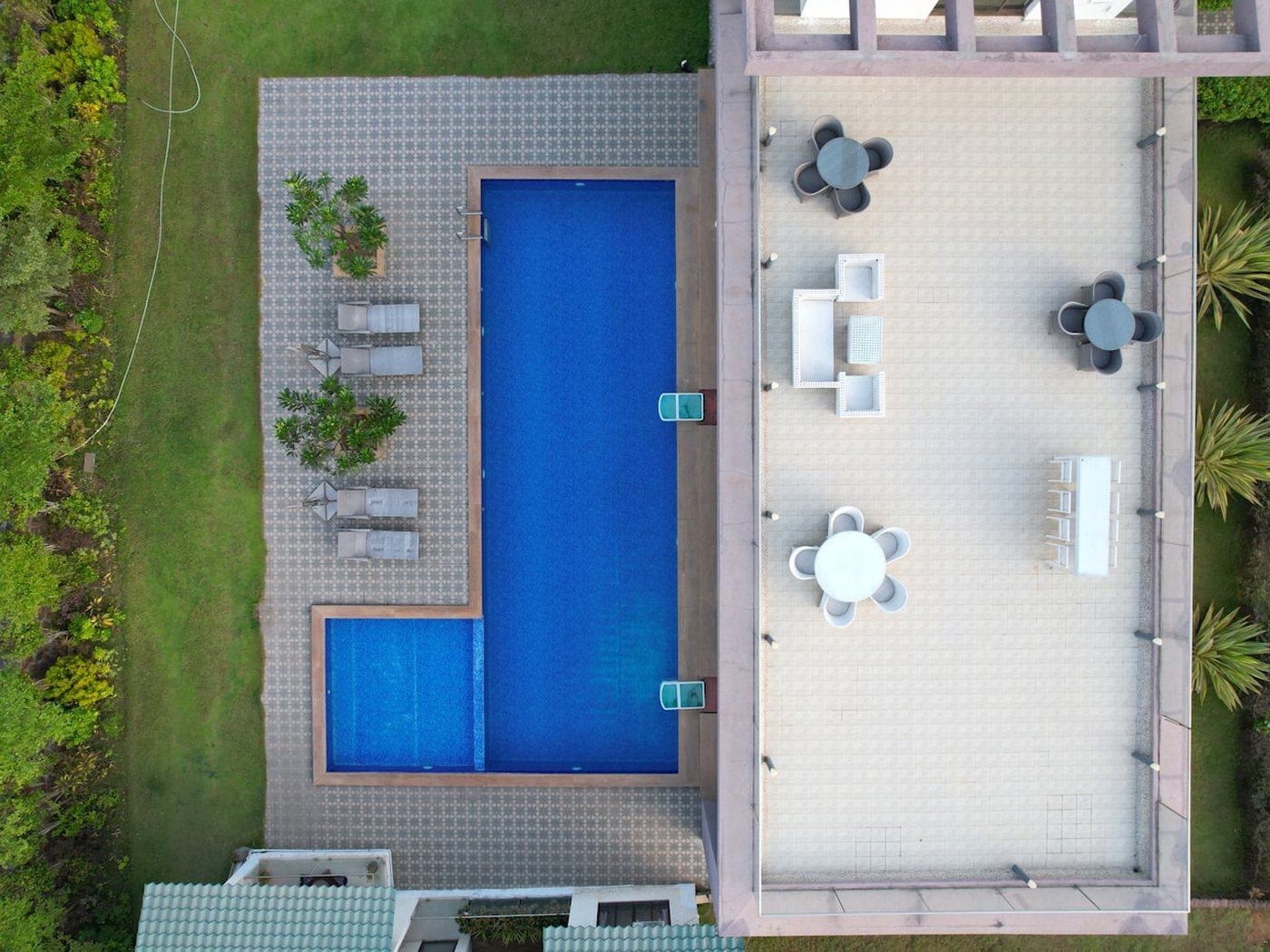
Ask a homeowner to picture the backyard they are paying for and they will describe an evening. Friends, a drink, the fire going, someone in the pool. Almost nobody pictures two in the afternoon.
Then look at how the project gets quoted and photographed, and lighting is a small line near the bottom, frequently the first thing removed when the budget tightens.
The gap between what is sold and what is imagined
A paved area with no lighting is usable for a few hours a day in summer and effectively unusable after dark. The client has bought a daytime space and imagined an evening one, and the disappointment arrives about a fortnight after handover.
This is not primarily a technical failure. It is a sales failure — lighting was presented as an accessory rather than as the thing that makes the space work at the time of day it was bought for.
How to present it instead
Include lighting in the base scope rather than as an option. If the budget genuinely will not stretch, reduce the paved area instead. A smaller space that is beautiful at night is worth more to the client than a larger one they stop using at sunset.
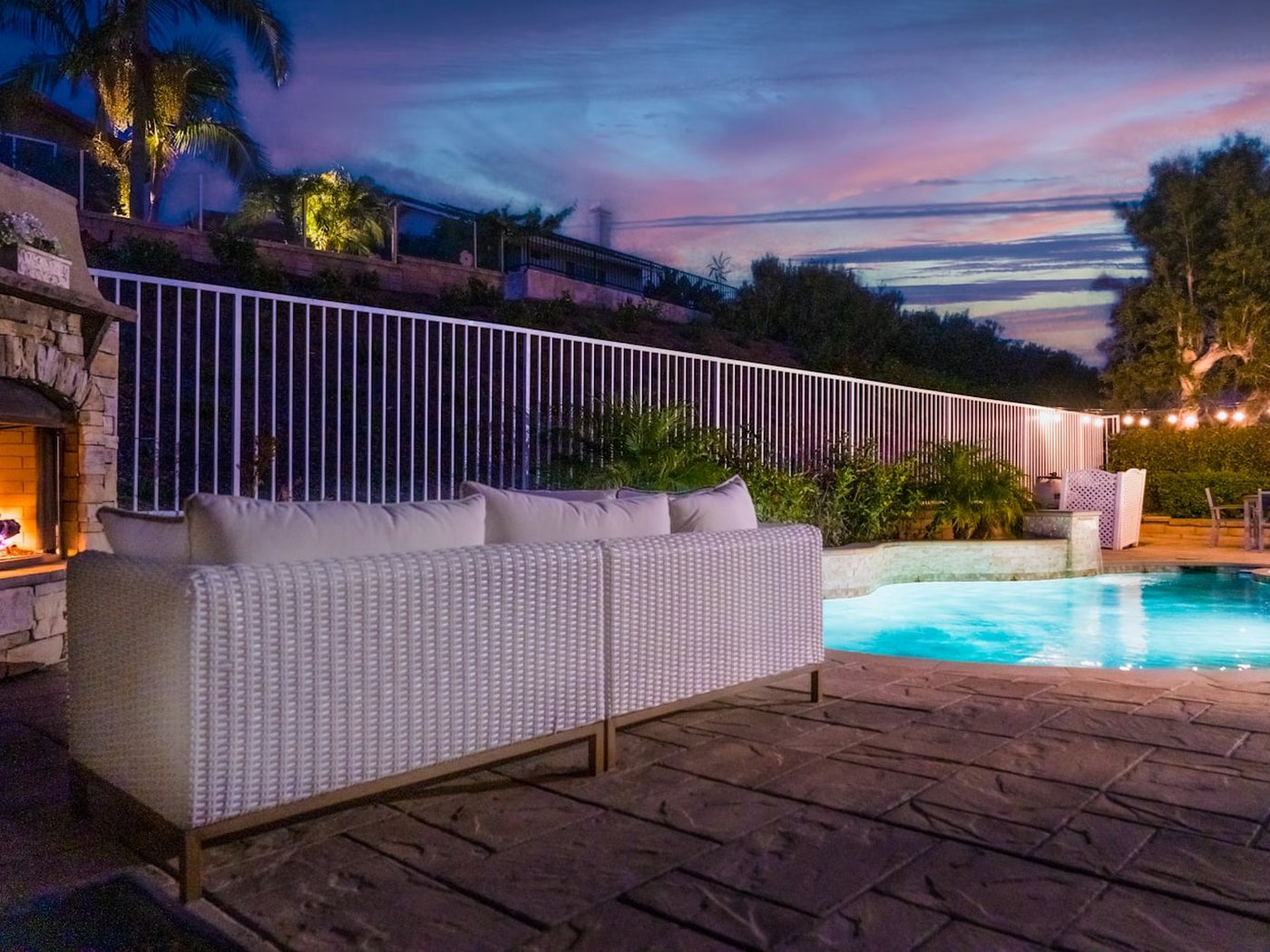
Show it. Every photograph in your portfolio should be a dusk shot with the lights on. Clients who have only seen your daytime work do not know what they are missing, and cannot ask for it.
What actually matters technically
- Layers, not floodlight. Several low sources at different heights beat one bright fitting, which flattens everything and dazzles.
- Light the edges and the verticals. Steps, walls, planting and level changes. Lighting the vertical surfaces makes the space feel larger; lighting only the floor makes it feel like a car park.
- Warm temperature. Around 2700K. Cooler light reads as institutional and undoes the atmosphere everything else was building.
- Dimming and zones. The same space needs different settings for dinner and for a party. Zones cost little at installation and are expensive to retrofit.
- Conceal the source. Visible bright fittings are the most common fault. The light should be apparent and the fixture should not.
The commercial argument
Lighting is a comparatively high-margin element of most outdoor projects and one of the least price-shopped, because clients have no reference for what it should cost. It also produces the photographs that win your next several jobs.
So a project quoted with lighting included is worth more, photographs better, and leaves a client who uses the space nightly rather than occasionally. That last one is where the referrals come from — nobody recommends a patio they stopped using in March.
How to include it without inflating the quote
The obvious objection is that adding lighting to every quote makes you more expensive than the contractor who leaves it out, and on a line-by-line comparison it does.
Two things address that. First, present it as part of the scope rather than an itemised addition, so the comparison is between two finished spaces rather than between a space and a space-plus-extras. Second, be explicit in the quote that lighting is included and that quotes excluding it are not comparable — one sentence, stated without disparaging anyone, reframes the entire comparison.
If the budget genuinely will not stretch, reduce the paved area rather than removing the lighting. A smaller space that works at night is worth more to the client than a larger one they stop using at sunset, and they will thank you for the advice.
Provision now, fittings later
Where a client is immovable on budget, the compromise that protects them is running the cabling and setting the conduit during the build, then fitting later.
The trenching, sleeving under paving and provision at the board is a small fraction of the total cost while the ground is already open. Retrofitting the same cabling afterwards means lifting paving and is disproportionately expensive — frequently several times the original cost.
So the honest advice is: if lighting cannot be afforded now, at least do not make it prohibitively expensive later. Clients remember being told that, and a meaningful number come back for the fittings within a year.
Common faults, and how to avoid them
- Too much light. Outdoor spaces need far less than people expect. Overlighting kills atmosphere and destroys the view beyond the space.
- Uplighting into windows. Check sightlines from inside the house and from the neighbours before committing to positions.
- All fittings on one circuit. Zones cost very little at installation and transform how the space is used.
- Fittings in the mowing line. Spike lights in a lawn have a short and eventful life.
- Cheap fittings in a wet zone. The saving is small and the failure is expensive, visible and yours to fix.
Selling the retrofit
Past clients with unlit spaces are the warmest possible audience, and almost nobody contacts them.
The message that works is not an offer. It is an observation: as the evenings draw in, the space they spent a lot of money on is sitting unused for most of the day, and there is a way to change that which does not involve rebuilding anything. Include a photograph of a comparable space lit at dusk, because the difference is not describable in words.
Send it in early autumn, when the absence is most obvious and the diary is opening up. For most hardscape businesses it is the single highest-converting message they send all year, and it costs an hour to write.
Retrofitting
Talking about it at the quote stage
The conversation that sells lighting happens on site, not in the document, and it takes about a minute.
Ask when they picture using the space. They will describe an evening, every time. Then ask what they imagine it looking like once it is dark. Most people have not thought about it, and the question does the work — you have not pitched anything, you have simply pointed at a gap between what they want and what they were about to buy.
Follow it with a photograph of a comparable space at dusk on your phone. That single image converts more lighting scope than any amount of explanation, because the difference between a lit and unlit outdoor space is not something people can picture from a description.
What good looks like
If you want a reference for the standard to aim at, look at how hotels light their outdoor spaces. Low, warm, layered, sources concealed, verticals lit, and considerably dimmer than most people expect.
Nobody notices the lighting, which is the point. They notice that the space feels good to be in after dark, and they stay longer. That is exactly the outcome your client is buying, whether or not they have the vocabulary to ask for it.
The same test applies to your own work. Stand in a finished space after dark and ask whether you would want to sit there for two hours. If the answer is no — too bright, too even, a fitting glaring at eye level — it is not finished, regardless of how good the paving is. That standard costs very little to hold and it is the difference between a space that gets photographed and one that gets used.
If you have completed projects without lighting, they are a genuine opportunity. A short note to past clients offering to add lighting to the space they already have is one of the highest-converting things a hardscape business can send, particularly heading into the darker months when the absence is most obvious.